Pinddaan
A sacred offering made in remembrance of departed ancestors. In Hindu belief, it is performed with prayers for their peace and liberation.
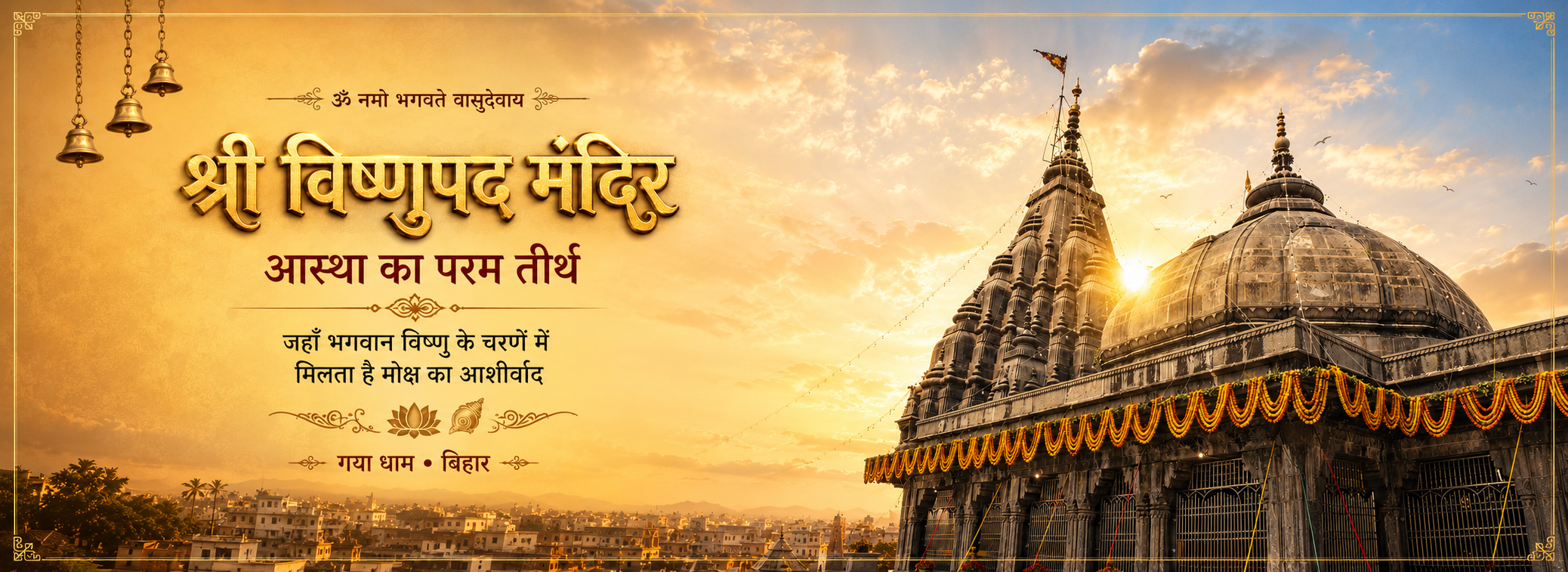
Discover a living tradition of faith on the banks of the Falgu, where families gather to honour those who came before them.
Situated beside the Falgu River in Bihar, Gaya Ji holds a special place in Hindu pilgrimage and the tradition of remembering ancestors.
Its temples, riverbanks and sacred ritual sites bring together generations of pilgrims. At the heart of this heritage stands Vishnupad Temple, associated in Hindu belief with the footprint of Lord Vishnu.
Gaya Ji’s ancestral rites are an expression of gratitude, devotion and the enduring connection between a family and its forebears.
Religious significance described on this page reflects Hindu beliefs and pilgrimage traditions.
Pitrupaksha is the period traditionally dedicated to ancestral remembrance. During this observance, pilgrims come to Gaya Ji to offer prayers and perform rites for their departed family members.
The Pitrupaksha Mela brings this shared devotion into the city’s temples and pilgrimage spaces. For families, the journey is both a religious observance and a deeply personal act of remembrance.
For current mela dates and visitor arrangements, consult the official pilgrimage portal ↗.
An introduction to the ancestral observances associated with the pilgrimage to Gaya Ji.
A sacred offering made in remembrance of departed ancestors. In Hindu belief, it is performed with prayers for their peace and liberation.
A ritual offering of water, accompanied by prayers for ancestors. It forms part of the wider tradition of ancestral remembrance.
An observance rooted in faith and gratitude towards one’s forebears. Families follow the practices of their tradition with religious guidance.
The sequence, offerings and duration of rituals can vary by family tradition. Discuss the observance with your family priest or a verified local priest before making arrangements.
A revered shrine on the banks of the Falgu. Its name refers to the footprint traditionally associated with Lord Vishnu, and it is central to Gaya Ji’s pilgrimage heritage.
The river landscape closely associated with Gaya Ji’s ancestral rites. Its banks form an important setting for pilgrims’ prayers and remembrance.
The sacred banyan tree is associated with the ancestral pilgrimage tradition of Gaya Ji. Consult local religious guidance about its place in your observance.
A sacred hill associated with rites for departed ancestors. Together with the city’s other ritual sites, it forms part of Gaya Ji’s wider pilgrimage landscape.
Understand the tradition and use current official information to plan your visit.
Hindu tradition regards Gaya Ji as a sacred place for ancestral rites. Its association with Lord Vishnu and its ritual sites give the pilgrimage particular religious significance.
No. This is an informational page about Gaya Ji’s sacred heritage. Use the official portal for available pilgrim information and verified assistance.
Visit the official Pinddaan Gaya Ji portal for current notices, travel information and facilities.
Use designated waste bins, avoid littering, and follow local guidance for the disposal of ritual materials. Respect queues, other pilgrims and the sanctity of worship spaces.
Honour the tradition. Respect the place. Keep Gaya Ji clean.
Visit the official pilgrim portal ↗